
PlantU Blog · Articles
Best Indoor Plants for Beginners: 14 Easy Picks That Are Hard to Kill
The best indoor plants for beginners are the ones that survive a missed watering, a dim corner and a week away from home. Snake plant, ZZ plant, money plant (pothos), spider plant and peace lily to…
The best indoor plants for beginners are the ones that survive a missed watering, a dim corner and a week away from home. Snake plant, ZZ plant, money plant (pothos), spider plant and peace lily top that list, and most of them cost less than a takeaway dinner.
If you have ever bought a beautiful plant only to watch it droop within a month, the problem was probably the match, not you. Some plants need bright sun and careful watering. Others are happy almost anywhere. This guide covers 14 forgiving picks, sorted by light, size, type and budget, so you can choose with confidence.
What Makes a Plant Beginner-Friendly?
A beginner-friendly plant forgives mistakes. Before you buy, check for these five traits:
- Tolerates low or indirect light, so it survives away from a window
- Stores water in thick leaves, stems or roots, so a missed watering is not fatal
- Shows clear signals, like drooping leaves when thirsty
- Grows slowly, so it rarely needs repotting
- Resists common pests such as mealybugs and spider mites
Every plant in this list ticks at least four of these boxes. That is what makes them true easy care indoor plants.
Best Low Light Indoor Plants for Beginners
Most Indian flats have a dim corner or a north-facing room. These three plants handle it well.
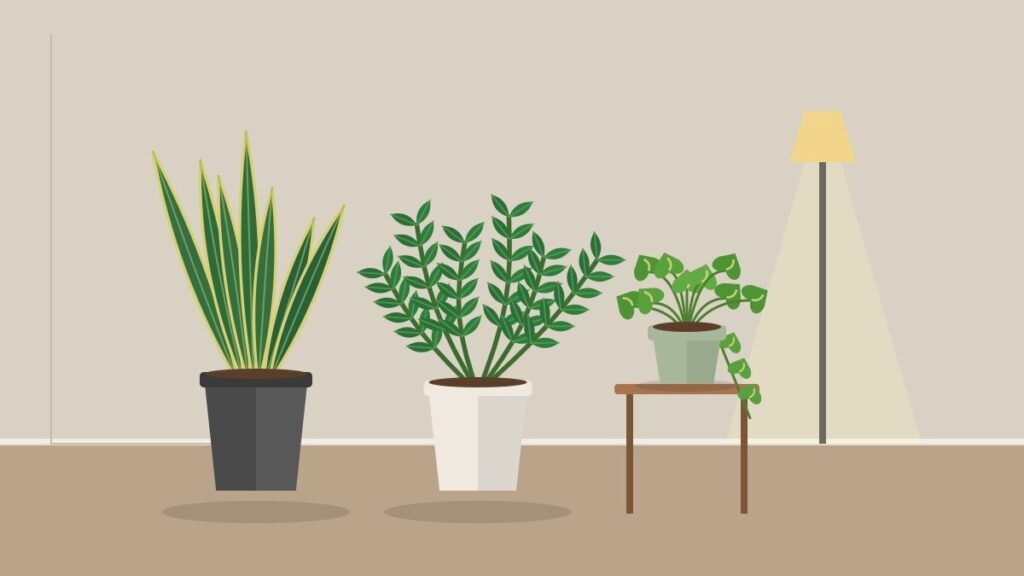
Snake Plant (Sansevieria)
The snake plant is the most forgiving houseplant you can buy. Its stiff, upright leaves store water. It tolerates low light but grows faster in bright, indirect light.
- Water: Every 2–3 weeks; less in winter
- Mistake to avoid: Overwatering, which causes root rot
ZZ Plant (Zamioculcas)
The ZZ plant has glossy, dark green leaves that look polished even when ignored. Its potato-like roots store water for weeks. It is ideal for offices and rooms with only artificial light.
- Water: Every 2–3 weeks, once the soil is fully dry
- Mistake to avoid: Keeping it in a pot with no drainage hole
Money Plant (Pothos)
The money plant is a fast-growing vine found in almost every Indian home. Yellow leaves usually mean too much water; pale leaves mean too little light.
- Water: Once a week, when the top inch of soil is dry
- Mistake to avoid: Leaving it in direct afternoon sun
Best Air Purifying Indoor Plants
NASA's 1989 Clean Air Study found plants like these removed some pollutants in sealed test chambers. In a real home the effect is small, so treat cleaner air as a bonus to the greenery and calm they add.
Peace Lily (Spathiphyllum)
The peace lily has dark leaves and white, sail-shaped blooms. It droops dramatically when thirsty and perks up within hours of watering, which makes it a great teacher for new plant parents.
- Light: Low to medium indirect light
- Note: Toxic to cats and dogs if chewed
Spider Plant (Chlorophytum)
The spider plant has arching green-and-white leaves and grows baby plantlets you can replant. It is safe for pets and adapts to most rooms.
- Light: Bright, indirect light
- Water: Once a week
Areca Palm
The areca palm brings a resort-style look to living rooms. It likes bright, indirect light and slightly moist soil.
Flowering Indoor Plants That Forgive Mistakes
Most flowering indoor plants need more light than foliage plants, so place these near a bright window.
Anthurium
Anthurium produces glossy red, pink or white heart-shaped blooms that last for weeks. It likes bright, indirect light and watering once the top inch of soil dries.
Kalanchoe
Kalanchoe is a flowering succulent with clusters of tiny orange, pink or yellow flowers. It needs a sunny windowsill and very little water, so it suits forgetful owners.
Succulents: Indoor Plants for Sunny Windowsills
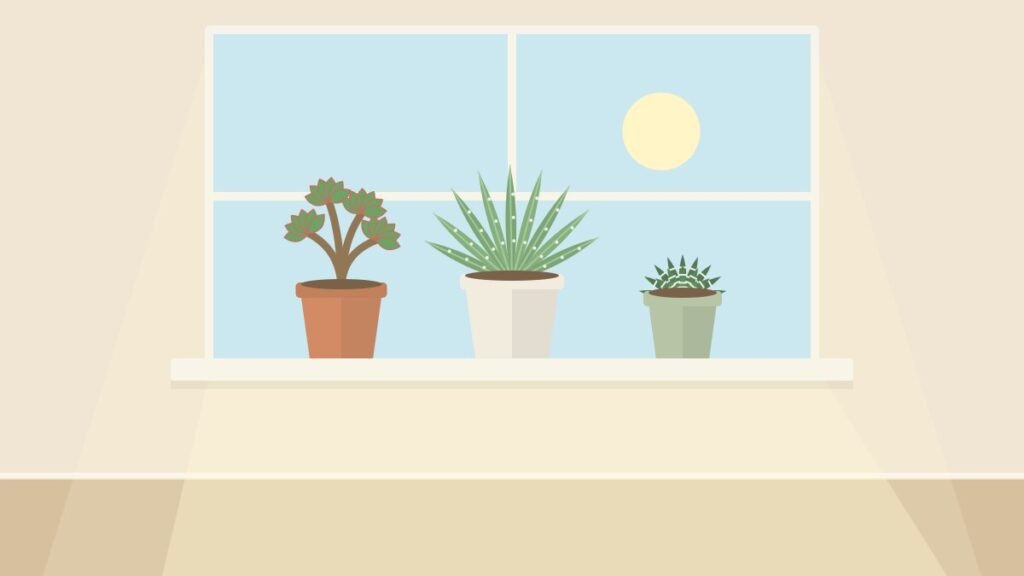
If you have a balcony door or a south-facing window, succulents are the easiest place to start. Treat these succulents indoor plants as "water deeply, then forget": soak the soil, let it dry completely, and repeat.
- Jade plant: Thick, coin-shaped leaves; often gifted for good luck
- Aloe vera: Useful gel for minor skin irritation; needs 4+ hours of light
- Haworthia: Small and striped; one of the few succulents that tolerate medium light
Foliage Indoor Plants for Colour Without Flowers
Foliage plants give you colour through their leaves, all year round. They are also more forgiving than flowering varieties.
- Aglaonema (Chinese evergreen): Red, pink or silver patterned leaves; tolerates low light
- Syngonium (arrowhead plant): Arrow-shaped leaves in green, pink or cream; grows quickly
- Rubber plant: Large, glossy, deep green or burgundy leaves; wipe them monthly to keep the shine
Hanging Indoor Plants for Small Spaces
No floor or shelf space? Go vertical. Hanging indoor plants make use of empty air near windows, balcony grills and ceilings.
- Money plant: Trails 1–2 metres if allowed
- Spider plant: Plantlets dangle beautifully from a hanging basket
- String of pearls: A trailing succulent for bright spots only
Tip: Water hanging pots over a sink, or use a pot with an attached saucer to avoid drips.
Small vs Large: Choosing by Space
Small Indoor Plants and Tabletop Picks
Small indoor plants (under 30 cm) fit desks, bedside tables, bathroom shelves and dining tables.
Good tabletop indoor plants include haworthia, jade, a small snake plant (such as the 'Hahnii' variety), syngonium and a money plant in a glass jar.
Large and Floor Picks
Large indoor plants (over 90 cm) act like living furniture.
The best floor indoor plants for beginners are the areca palm, rubber plant, tall snake plant and a mature ZZ plant. Place them where they get some natural light, even if indirect.
Quick Comparison: 14 Beginner Plants at a Glance
| Plant | Light | Water | Size | Pet-safe | Typical price (₹) |
|---|---|---|---|---|---|
| Snake plant | Low to bright | Every 2–3 weeks | Small to large | No | 200–600 |
| ZZ plant | Low to medium | Every 2–3 weeks | Medium | No | 350–800 |
| Money plant (pothos) | Low to medium | Weekly | Hanging | No | 150–350 |
| Spider plant | Medium to bright | Weekly | Small, hanging | Yes | 200–400 |
| Peace lily | Low to medium | Weekly | Medium | No | 300–600 |
| Areca palm | Bright indirect | Keep slightly moist | Large | Yes | 600–1,500 |
| Anthurium | Bright indirect | Weekly | Medium | No | 400–900 |
| Kalanchoe | Bright, some sun | Every 2 weeks | Small | No | 200–400 |
| Jade plant | Bright, some sun | Every 2–3 weeks | Small | No | 200–450 |
| Aloe vera | Bright, some sun | Every 2–3 weeks | Small | No | 150–300 |
| Haworthia | Medium to bright | Every 2–3 weeks | Small | Yes | 150–350 |
| Aglaonema | Low to medium | Weekly | Medium | No | 300–700 |
| Syngonium | Medium | Weekly | Small to medium | No | 150–400 |
| Rubber plant | Medium to bright | Every 1–2 weeks | Large | No | 400–1,000 |
Prices are approximate ranges for nursery and online sellers in India and vary by city, size and pot.
Ceramic or Plastic Pot: Which Should You Choose?
The pot affects how fast soil dries, so it matters more than most beginners expect. Whichever you choose, make sure it has a drainage hole.
| Factor | Ceramic pot | Plastic pot |
|---|---|---|
| Look | Premium, decorative | Simple, functional |
| Weight | Heavy, stable for tall plants | Light, easy to move or hang |
| Soil moisture | Dries faster if unglazed | Holds moisture longer |
| Best for | Succulents, snake plant, ZZ plant | Peace lily, ferns, hanging plants |
| Price | Higher | Lower |
Indoor plants in a ceramic pot suit living rooms and gifting, because the pot is part of the decor. Indoor plants in a plastic pot are better for first-timers who water often, for hanging baskets, and for anyone who moves house frequently. A popular middle path: keep the plant in its plastic nursery pot and slip it inside a ceramic cover pot.
Buying on a Budget: Indoor Plants Under ₹500
Most indoor plants under ₹500 are small, healthy starter sizes that grow into bigger plants within a year.
Under ₹500, you can usually find a money plant, snake plant, spider plant, syngonium, jade, aloe vera, haworthia or kalanchoe in a basic pot.
To stretch your budget further, look for indoor plants on sale during festive seasons such as Diwali, and check for combo packs. Before you buy any discounted plant, check for:
- Firm, unwrinkled leaves with no yellow patches
- No white cotton-like spots (mealybugs) under leaves
- Roots that are not circling out of the drainage hole
Frequently Asked Questions
Which is the easiest houseplant to keep alive?
The snake plant and the ZZ plant are the easiest. Both tolerate low light, store water for weeks, and rarely get pests.
How often should I water indoor plants?
There is no fixed schedule. Push a finger an inch into the soil: if it is dry, water thoroughly until water drains out of the bottom. Most plants need water every 7 to 14 days; succulents need it every 2 to 3 weeks. Water less in winter and more in summer.
Can I keep plants in a room with no windows?
Only a few can cope, and only with artificial light. The ZZ plant, snake plant and money plant can survive under bright white LED or tube lights kept on for 8 to 10 hours a day. Rotating them near a window for a week every month helps.
Which plants are safe for cats and dogs?
The spider plant, areca palm and haworthia are generally considered non-toxic to pets. Snake plant, peace lily, money plant and ZZ plant can cause irritation if chewed, so keep them out of reach.
Why are my plant's leaves turning yellow?
Overwatering is the most common cause. Check whether the soil stays wet for days and whether the pot has a drainage hole. Old lower leaves yellowing slowly is normal.
Conclusion: Start Small, Grow From There
The best indoor plants for beginners match your light, your space and your routine. If your room is dim, start with a snake plant or ZZ plant. If you have a sunny window, try a jade or aloe vera. On a tight budget, pick one or two plants under ₹500.
Start with one plant, learn its signals for a month, then add another.
Ready to Bring Home Your First Plant?
At Plantu, we specialise in small, easy-care table plants that arrive healthy, potted and ready for your desk or shelf. Each one comes with simple care instructions written for first-time plant parents.
Browse our beginner-friendly table plants →
Quick Plant Finder
| Your space | Best picks |
|---|---|
| Dim room or office | Snake plant, ZZ plant, money plant |
| Bright room, no direct sun | Peace lily, spider plant, anthurium, aglaonema |
| Sunny windowsill | Jade plant, aloe vera, haworthia, kalanchoe |
| Desk or side table | Haworthia, syngonium, small snake plant |
| Empty floor corner | Areca palm, rubber plant, tall snake plant |
| Home with cats or dogs | Spider plant, areca palm, haworthia |
Watering Guide
Use these intervals as a starting point, and always check that the top inch of soil is dry before watering.
| Plant group | Summer (Mar–Jun) | Monsoon and winter |
|---|---|---|
| Succulents: jade, aloe vera, haworthia, kalanchoe | Every 10–14 days | Every 3–4 weeks |
| Snake plant, ZZ plant | Every 2 weeks | Every 3–4 weeks |
| Money plant, syngonium, aglaonema, spider plant | Every 5–7 days | Every 10–14 days |
| Peace lily, anthurium, areca palm, rubber plant | Every 4–6 days | Every 7–10 days |